
Effective note-taking is key for research productivity. A study showed researchers spend a lot of time on notes. Some say up to 30% of their time is for this.
For researchers, staying organized is essential. Logseq and Obsidian are two apps that help with research organization. We’ll compare them to help you pick the best one for you.
Key Takeaways
- Comparison of Logseq and Obsidian’s features for research purposes
- Analysis of user interface and user experience
- Evaluation of the apps’ capabilities in aiding research organization
- Insights into the strengths and weaknesses of each app
- Guidance on choosing the best note-taking app for your research needs
Overview of Logseq and Obsidian
Logseq and Obsidian are top note-taking apps that boost your research workflow. They offer unique features for different needs. Both have become popular for their capabilities.
What is Logseq?
Logseq is an open-source app for note-taking. It lets users create a knowledge graph to link and organize notes. It supports Markdown and has a clean interface for managing research.
One of its standout features is the ability to create a network of interconnected notes. This makes it easier to navigate and reference information.
What is Obsidian?
Obsidian is a note-taking app that focuses on linking and organizing notes. It creates a personal knowledge base. It’s highly customizable and supports many plugins to enhance its features.
Obsidian’s strength lies in its flexibility and the ability to tailor the app to individual preferences.
Key Features of Both Apps
Both Logseq and Obsidian have key features for research:
- Note Linking: Both apps allow users to link notes, creating a web of interconnected information.
- Tagging System: They support tagging, making it easier to categorize and search for notes.
- Markdown Support: Both apps are compatible with Markdown, enabling users to format their notes easily.
- Customization: Obsidian is known for its customization options, while Logseq offers a straightforward experience.
A user noted, “The ability to link notes and create a knowledge graph is a game-changer for researchers.” This shows how important these features are.
“The right tool can make all the difference in managing research materials effectively.”
User Interface and Experience
Choosing a note-taking app depends a lot on the user interface and experience. Logseq and Obsidian have different interfaces that suit various preferences.
Design Aesthetics: Logseq vs Obsidian
Logseq has a minimalistic design that focuses on function. It’s great for those who like a clean space. Obsidian, by contrast, has a customizable interface. This lets users tailor their note-taking experience.
Ease of Use for Beginners
Obsidian might be harder for beginners because of its many customization options. Logseq is simpler and easier for new users to start with.
Customization Options
Both apps let you customize, but Obsidian offers more. You can extensively personalize the interface, including themes and layouts. Logseq also allows customization, but not as much as Obsidian.
| Feature | Logseq | Obsidian |
|---|---|---|
| Design Aesthetics | Minimalistic | Highly Customizable |
| Ease of Use | Easy for Beginners | Steeper Learning Curve |
| Customization Options | Limited | Extensive |
Note-Taking and Organization
Effective note-taking is key in research. Logseq and Obsidian offer different ways to organize your notes. We’ll look at how they help you structure your notes, link them, and tag important keywords.
Structure of Notes in Logseq
Logseq uses a hierarchical structure for note-taking. It lets you create a network of connected notes. This is done with bullet points and indentation, making complex info easy to organize.
Logseq also lets you create pages and blocks. These can be linked to form a vast knowledge base.
Structuring Notes in Obsidian
Obsidian takes a graph-based approach to note-taking. Each note is a node that can link to others. This creates a web-like structure for easy navigation and finding related info.
Obsidian uses Markdown files for notes. This means notes are in plain text, accessible on any platform.
Linking and Tagging Capabilities
Both Logseq and Obsidian have strong linking and tagging features. They help you connect related notes and spot key themes. Logseq lets you make bidirectional links between notes. Obsidian’s graph view shows connections, helping you see the bigger picture.
Both apps also support tagging. This lets you categorize notes and find specific info quickly.
Looking at Logseq and Obsidian’s note-taking features helps researchers pick the best app for their workflow. It boosts their productivity.
Markdown Support in Both Apps
For researchers, using Markdown is key. We’ll look at how Logseq and Obsidian handle Markdown. Markdown is a simple markup language for formatting text. Both apps support Markdown, but they differ in features.
Markdown Features in Logseq
Logseq has strong Markdown support for easy note formatting. It includes:
- Text formatting: bold, italic, strikethrough, and more
- Image insertion: easily add images to your notes
- Table creation: create tables using Markdown syntax
- Linking and tagging: link notes and tags using Markdown syntax
It also supports custom containers and definition lists. These are great for complex notes.
Markdown Features in Obsidian
Obsidian also has great Markdown support for research notes. It includes:
- Text formatting: bold, italic, strikethrough, and more
- Image insertion: easily add images to your notes
- Table creation: create tables using Markdown syntax
- Linking and tagging: link notes and tags using Markdown syntax
Obsidian’s Markdown is highly customizable. Users can extend the syntax and add new features. This is great for those who need a tailored note-taking app.
Formatting Comparisons
Both Logseq and Obsidian have a lot of Markdown features. But, they differ in focus. Logseq is better for outlining and note-taking. Obsidian is better for customization and extensibility.
In conclusion, both apps are great for research note-taking. Knowing their strengths and weaknesses helps researchers pick the best tool for them.
Research Workflow Integration
Choosing between Logseq and Obsidian can greatly affect your productivity. Both apps have features that make research better, from taking notes to organizing and working together.
Good research workflow tools do more than just take notes. They handle complex data, links, and tags well. Logseq and Obsidian are built for this, with features that meet academic research needs.
Logseq for Academic Research
Logseq is great for academic research because of its note linking and tagging. It lets researchers connect their notes in a network. This makes it easier to find and use their work.
Logseq also has outlining and journaling features for organizing research. It helps break down big projects into smaller parts. And its search function makes finding information quick.
Obsidian’s Suitability for Research Projects
Obsidian is also a strong choice for research, with customization and flexibility. It supports markdown and lets you create custom workflows. This is good for researchers who need a tool that fits their project.
Obsidian’s graph view is great for seeing how notes and ideas are connected. It helps spot patterns and relationships that might be hard to see.
Logseq and Obsidian each have their own strengths for research workflow. Knowing what each app can do helps researchers choose the best one for their needs.
Collaboration Features
The right note-taking app is key for collaborative research. Teamwork is common in research projects. So, the ability to work together well is very important.
“Collaboration is the key to innovation,” and apps like Logseq and Obsidian help with this. We’ll look at how they help with sharing and team work.
Sharing and Team Collaboration in Logseq
Logseq makes teamwork easy with its features. It lets users share notes and pages with others. This makes it simple to work together on projects.
Key collaboration features in Logseq include:
- Real-time collaboration: Multiple users can edit the same note at the same time.
- Permission controls: Users can decide who can see or edit their notes.
- Version history: Logseq tracks changes, so users can go back to old versions if needed.

Collaboration Capabilities in Obsidian
Obsidian also has great collaboration features, but it works differently than Logseq. Its flexibility and customization options are great for team work.
Obsidian’s collaboration capabilities include:
- Linking notes: Obsidian’s linking feature helps create a network of notes, making team work easier.
- Custom plugins: Obsidian’s plugins can improve team collaboration.
- Data ownership: Obsidian lets users control their data, which is good for team projects.
Obsidian’s community says, “The beauty of Obsidian lies in its flexibility and the control it gives users over their data.” This flexibility is great for team research where everyone has different needs.
In conclusion, both Logseq and Obsidian have unique features for teamwork. Knowing what each app does best helps researchers pick the right tool for their team.
Community and Support Resources
For researchers, having good community support and resources is key. Both Logseq and Obsidian offer support, but in different ways.
Logseq Community and Documentation
Logseq has an active community. Users help develop it and share their experiences. The Logseq community is very helpful. They share tutorials and tips to get the most out of the app.
- Documentation: Logseq’s documentation is detailed. It covers everything from basic to advanced features.
- Community Forums: The Logseq forums are great for asking questions and sharing knowledge. They also keep you updated on new features.
Obsidian Community and Support
Obsidian also has a strong community. It focuses on plugin development and customization. Obsidian’s support resources aim to help users use the app to its fullest.
- Documentation: Obsidian’s documentation is detailed. It focuses on its plugin ecosystem.
- Community Support: Obsidian’s community is active on forums and social media. They provide support and share knowledge.
Comparing Support Resources
Looking at Logseq and Obsidian’s support resources, we see some differences.
| Feature | Logseq | Obsidian |
|---|---|---|
| Documentation | Comprehensive, covering basic to advanced features | Detailed, with a focus on plugin ecosystem |
| Community Support | Active community, helpful tutorials, and tips | Strong community, active on forums and social media |
Both Logseq and Obsidian have great community and support resources. But they are different. Logseq’s community is known for its helpfulness and detailed documentation. Obsidian’s community is great for plugin development and customization. Think about what support you need for your research when choosing between them.
Pricing and Availability
Choosing between Logseq and Obsidian for research depends on pricing. Both apps have plans for different needs. Knowing these can help you decide.
Cost of Logseq
Logseq is an open-source application that’s free to use. It has no premium features or subscription plans. This makes it great for those on a budget.
Cost of Obsidian
Obsidian also has a free version with lots of features. It’s good for many users. But, Obsidian has a commercial license for businesses and extra features in paid plans.
Free vs Paid Features
Both Logseq and Obsidian have free versions. But, Obsidian’s paid features are good for advanced users or teams. Logseq’s free model is best for individual researchers.
Here’s a comparison of the key features and pricing:
| Features | Logseq | Obsidian |
|---|---|---|
| Free Version | Yes | Yes |
| Paid Version | No | Yes |
| Open-source | Yes | No |
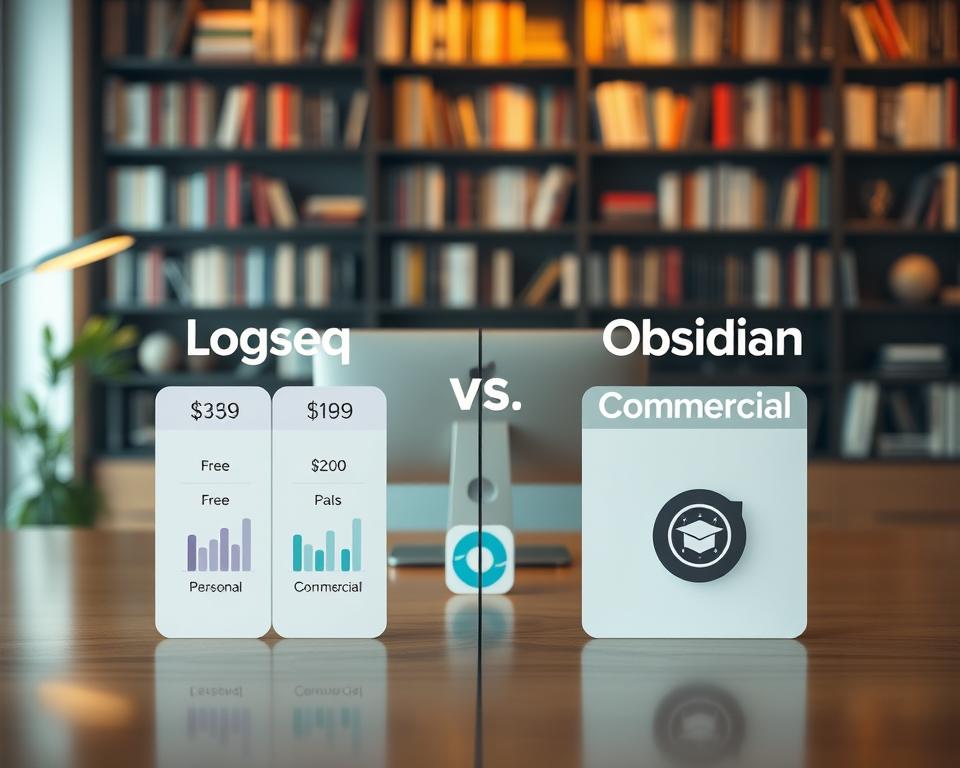
In conclusion, Logseq is perfect for researchers needing a simple, free note-taking app. Obsidian offers more with free and paid options, meeting a wider range of needs.
Cross-Platform Compatibility
For researchers on the move, a note-taking app’s cross-platform ability is key. Today, accessing your notes on various devices is essential, not just a bonus.
Logseq and Obsidian get this and have made their apps work on many platforms. Let’s explore how each app handles device access and multi-platform use.
Logseq’s Device Accessibility
Logseq provides a solid cross-platform experience. It lets users access their notes on desktops, mobiles, and the web. This flexibility is vital for those who work on different devices.
Key Features of Logseq’s Cross-Platform Compatibility:
- Desktop Application: Works on Windows, macOS, and Linux.
- Mobile App: Available for Android and iOS.
- Web Version: Use it on any device with internet through a web browser.
Obsidian’s Multi-Platform Functionality
Obsidian also offers great cross-platform functionality. It ensures users can access their notes anywhere. Obsidian focuses on a local-first approach for easy device syncing.
Obsidian’s Cross-Platform Highlights:
- Desktop Application: Works on Windows, macOS, and Linux, with a focus on local storage.
- Mobile App: Has apps for Android and iOS, with good syncing.
- Synchronization: While it values local storage, Obsidian also syncs through third-party services.
| Feature | Logseq | Obsidian |
|---|---|---|
| Desktop Platforms | Windows, macOS, Linux | Windows, macOS, Linux |
| Mobile Platforms | Android, iOS | Android, iOS |
| Web Access | Yes | No, but syncs via third-party services |
| Synchronization | Built-in sync | Third-party sync options |
Both Logseq and Obsidian offer strong cross-platform compatibility. They meet the needs of researchers who use many devices. Your choice might depend on your preferences for syncing and local storage.
Case Studies: User Experiences
Logseq and Obsidian are great for research, as shown by their users. Real-life stories help us see how these apps work in research settings.
Logseq Success Stories
Many researchers have seen big improvements with Logseq. A graduate student in environmental science found it easier to organize her thesis. She said Logseq’s outlining capabilities helped her link notes and ideas well.
A historian also loves Logseq for its flexibility. He said it’s great for handling lots of research data. He likes how it lets him interlink notes to understand his research better.
Obsidian User Testimonials
Obsidian users have great things to say too. A biomedical science researcher loves its robust tagging system. It makes it easy to organize and find notes, speeding up her work.
An academic writer also praises Obsidian. He likes how you can customize it. He says it helps him write better by making the app fit his needs.
| Feature | Logseq | Obsidian |
|---|---|---|
| Outlining Capabilities | Strong | Limited |
| Tagging System | Basic | Robust |
| Customization | Limited | Highly Customizable |
These stories show how Logseq and Obsidian can help in research. They help us see which app might be best for our needs.
Conclusion: Choosing the Right Tool for Research
Choosing between Logseq and Obsidian for note-taking can be tough. Both have their good points and bad points, as I’ve shown in this review.
Key Differences
Logseq and Obsidian differ in how they organize notes. Logseq uses a structured system, while Obsidian is more flexible with its graph database. Knowing these differences helps you pick the right app for your research.
Recommendations
If you like things organized, Logseq might be for you. But if you want something you can customize a lot, Obsidian could be better. The best app is one that fits your way of working and what you like.
Looking at Logseq vs Obsidian can help you decide which is best for your research.